


Smart Specialisation to drive international competitiveness
RDA Hunter is applying the proven Smart Specialisation system as a catalyst for new activities to strengthen the economic development of the region. Smart Specialisation helps define our competitive advantages.
Smart Specialisation is implemented widely across the European Union and has proven highly successful. It establishes priorities for investment and research that maximise the competitive advantages of a country or region through innovation and collaboration.
The essential elements of Smart Specialisation for the Hunter are:
• It’s a local, place-based endeavour which builds on existing skills and capacity;
• Hunter stakeholders (not central planners) identify and prioritise a limited number of areas of shared strength;
• The entire innovation system of the region is involved; and
• Current areas of expertise combine with new opportunities to drive the global competiveness of the Hunter’s economy.
Smart Specialisation is an integral part of RDA Hunter’s ongoing work to grow the Hunter’s international competitiveness through innovation and builds on the outcomes of the 2013 and 14 Hunter Innovation Scorecards.
Based on framework developed by the OECD that is implemented widely across the European Union, smart specialisation establishes an agenda for economic transformation by analysing regional competencies and discovering new areas of opportunity.
RDA Hunter’s Smart Specialisation is a first for regional Australia and is supported by Australia’s Chief Scientist Prof Ian Chubb AC, NSW’s Chief Scientist Prof Mary O’Kane, and the European Union Delegation to Australia who comprise the initial reference group.
“The aim of RDA Hunter’s Smart Specialisation project is to identify, build on and promote the Hunter’s strengths so that we can focus government resources for stronger economic growth,” said Todd Williams, CEO RDA Hunter.
“Our Smart Specialisation initiative builds on the outcomes of our Hunter Innovation Scorecards by identifying the region’s key sectors, developing innovation activities that will grow these sectors further and directing resources to realise that growth,” continued Mr Williams.
Other Articles from this issue
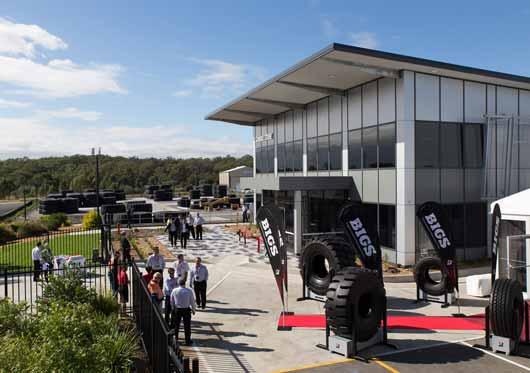
Mt Thorley home to Bridgestone’s Institute Global Mining Solutions
A global centre for tyre excellence opened at Mt Thorley in April to better support the economically vital mining sector...

Hunter Defence Conference
The 2015 Hunter Defence Conference was held at the iconic Fort Scratchley function centre and historic site on 20-21 May...
Property now Australia's biggest industry
The property industry’s share of GDP rose to $182.5 billion in 2013-14 – the highest of any industry in the country, acc...